
Finally, balance your sheet out by adding total liabilities to shareholders’ equity and comparing the total with total assets. If, however, your totals do not balance then you need to check your accounting data. A balance sheet is one of fixed assets the most important financial statements for any business, offering a snapshot of a company’s financial position at a specific point in time. It provides a clear overview of what a company owns, what it owes, and the equity held by its owners.

simple steps to create a balance sheet
The balance sheet is one of the most common financial reports you’ll have to prepare when running your own business. In this article, what is the last and most important step of creating a balance sheet? we’ve broken down how to prepare one into five steps, to make the process as quick and easy as possible for you. Keep reading to find out what a balance sheet is and how to get yours ready. The owner’s equity consists of the capital, profits, and other financial reserves that belong to the company's owners. This section includes the capital the owners have invested in the company, along with profits earned in the future.

What Is A Balance Sheet? Meaning, Components, Examples & Tips
- Let us help you create a balance sheet that accurately reflects the financial health of your business.
- It provides a snapshot of the company's assets, liabilities, and equity, helping stakeholders understand its financial health and stability.
- If a company or organization is privately held by a single owner, then shareholders’ equity will be relatively straightforward.
- A balance sheet is an essential tool for managing your small business finances.
- By following these steps, you can accurately prepare a balance sheet for your small business.
As a business owner, you may provide them to potential investors, or to financial analysts. As described at the start of this article, a balance sheet is prepared to disclose the financial position of the company at a particular point in time. For example, investors and creditors use it to evaluate the capital structure, liquidity, and solvency position of the business. On the basis of such evaluation, they anticipate the future performance of the company in Grocery Store Accounting terms of profitability and cash flows and make important economic decisions. Creating a balance sheet after periodic intervals is one of the core functions of any accounts team and a necessary part of running a successful business.
Segment data for greater clarity
If you’re looking to see where your business stands, a balance sheet can help you do that. As such, knowing how to make one is crucial for any business owner. If you need more information like this, be sure to check out our resource hub!
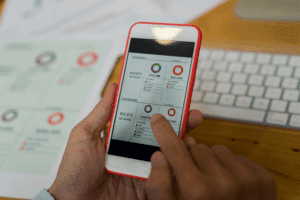
- Also, when it comes to balance sheets, a lot can impact the numbers.
- By setting up a Countingup business current account, you can manage all your financial data in one place.
- A balance sheet serves as a form of financial compass by providing an overview of a company’s financial statements at any one moment.
- Furthermore, when paired with all other financial statements and other documents, statements and accounts, the balance sheet becomes much more powerful.
- Investors and lenders rely on balance sheets to assess risk and determine creditworthiness.
This involves calculating the total value of all current and long-term liabilities identified in steps four and five. By adding up your liabilities, you can determine the total amount that the business owes to others. Double-check your calculations to ensure that the total value is accurate.
Categorize Assets as Current or Non-Current
For these reasons, the equity section can be quite complicated for many organizations. When the balance sheet is prepared, the liabilities section is presented first and the owners’ equity section is presented later. A balance sheet is prepared at the end of your reporting period at a particular date called the reporting date. Depending on the reporting period you choose your balance sheet preparation date will change accordingly. Note that if you’re carrying out these steps for the first time a good practice is to create a trial balance sheet before you start working on your actual balance sheet. Classified balance sheets are useful in managing a large number of accounts and consolidating them in an easy to understand format.
- Pic data from the previous 6th and 7th step, add total liabilities and equity.
- As the name of the balance sheet suggests, the total of each side should come to the same amount to show if your business is financially stable or not.
- We expect to offer our courses in additional languages in the future but, at this time, HBS Online can only be provided in English.
- Publicly available balance sheets from your state are also a great place to begin.
- It provides a clear overview of what a company owns, what it owes, and the equity held by its owners.
Shareholder equity denotes a company with a shareholder’s equity or shareholders’ ownership stake in it. It is also known as net assets and indicates a company with shareholder’s equity or remaining interest after subtracting liabilities from the company’s total assets. If a company is owned by a single person, this portion of the sheet is easy to calculate.